
Shibari Rope Marks: What Can They Tell Us?
Shibari Rope Marks: What Can They Tell Us?
After a Shibari session, ropes may leave red lines or light marks on the skin. These marks can provide useful information about tension, rope placement, and how pressure was distributed.
To understand them, it is mainly useful to observe their depth, regularity, and symmetry, while also taking into account the sensations reported by the person being tied.
Why Does Rope Leave Marks on the Skin?
Rope applies pressure and creates friction. The extent of the marks depends on several factors, including:
- the amount of tension applied;
- the duration of the tie;
- the number of rope wraps;
- the texture of the rope;
- the area of the body being tied;
- movement during the session;
- the individual sensitivity of the person.
Two people tied in the same way will not necessarily develop the same marks. Tension should always be adapted to the type of practice, the person’s body, and their sensations at that moment.
Depth and Regularity of Rope Marks
A superficial rope mark usually appears as a red line that gradually begins to fade.
A deeply indented mark may indicate significant tension or pressure that has been concentrated on a small area. When several rope strands form a band, their marks should generally remain relatively even and parallel.
If one strand leaves a much deeper mark than the others, this may indicate:
-
a twisted rope;
-
an unintended crossing;
-
a poorly smoothed rope band;
-
uneven tension distribution;
-
movement of the rope during the session.
The goal is not to produce perfectly identical marks, but to avoid having a single strand carry an excessive share of the tension.
Observing Symmetry
In a symmetrical tie, it can be useful to compare the marks on the right and left sides of the body.
A significant difference may indicate greater tension on one side, movement of the body, or tension that was redistributed unevenly.
The human body is never perfectly symmetrical. This observation should therefore always take the person’s anatomy, position, and mobility into account.
Smoothing the Rope to Distribute Pressure
Smoothing the rope against the skin helps keep the strands parallel and increases the surface area over which pressure is distributed.
A properly smoothed rope band can help:
- distribute tension more evenly;
- reduce concentrated pressure points;
- improve comfort;
- prevent unwanted crossings;
- produce more regular rope marks.
Rope placement should be monitored throughout the entire construction of the tie. A rope that is correctly positioned at the beginning may shift when the person changes position.
The quality of the equipment also matters. A regular and properly prepared Shibari rope can make handling and tension control easier, although it can never replace proper technical training.
Adapting Tension to Each Type of Practice
There is no single universal level of rope tension.
Floor work, immobilisation, and suspension do not create the same physical demands. Tension also varies depending on the area of the body, the person’s anatomy, the duration of the tie, and their level of experience.
Tension should be checked after every change of position. A rope that feels comfortable at the beginning may become too tight when body weight or pressure points shift.
To learn how to improve rope placement and adapt tension more accurately, private Shibari lessons in Paris offer personalised guidance.
Warning Signs That Should Never Be Ignored
Visible rope marks alone are not enough to assess whether a tie is safe.
The ropes should be loosened or removed if any of the following symptoms occur:
-
sharp, burning, or electric-like pain;
-
persistent tingling;
-
numbness;
-
loss of sensation;
-
weakness or difficulty moving;
-
a limb becoming unusually cold;
-
a significant change in skin colour;
-
rapid swelling.
If symptoms persist after the ropes have been removed, medical advice should be sought.
For suspension, you can also read the 10 essential Shibari suspension safety rules.
Why Should Safety Shears Always Be Accessible?
Safety shears for Shibari should remain immediately accessible throughout the entire session.
In the event of pain, loss of sensation, or physical distress, untying knots may take too long. Safety shears allow the rope to be cut quickly while their adapted tip helps protect the skin.
They should not be stored inside a bag or placed out of reach. Their cutting ability should also be checked regularly using a spare piece of rope.
In an emergency, the priority must always be the person, never the preservation of the equipment.
Heat and Sun Exposure
Heat and perspiration can make the skin more sensitive to friction. In hot conditions, it is preferable to shorten the duration of ties, take regular breaks, and frequently check the person’s condition.
After the session, an area that remains very red or irritated should be allowed to rest. It is preferable to avoid very hot showers, saunas, and direct sun exposure immediately afterwards.
A mark that is still visible can be protected with clothing. If the skin is intact and needs to be exposed, appropriate sun protection may be used.
Key Points to Remember
Rope marks should be assessed according to:
-
their depth;
-
their regularity;
-
their symmetry;
-
the distribution of pressure;
-
the sensations of the person being tied.
Smoothing the strands, monitoring their position, and adapting the tension can help reduce unnecessary pressure points.
A superficial mark can simply result from normal rope contact. However, significant pain, numbness, weakness, or a change in the temperature of a limb should never be dismissed.
Safety depends on three inseparable elements: appropriate technique, reliable Shibari equipment, and constant communication.
Note: this article provides general guidance and does not replace advice from a qualified healthcare professional.
Tagged in Corde
Linked products
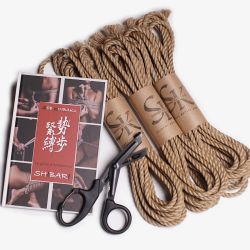
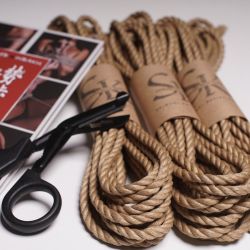
- Kit