

10 Essential Questions About Shibari Ropes and Gear
The 10 Essential Questions Every Shibari Practitioner Asks About Equipment
(A complete guide to understanding, choosing, and maintaining your Shibari equipment)
Shibari, the Japanese art of rope bondage, is attracting more and more practitioners around the world. Behind the visual beauty and emotional depth it offers, one element remains fundamental: Shibari equipment. The quality of a rope—its treatment, resistance, texture, and handling—directly influences the safety, comfort, and sensation experienced during a Shibari session.
This article brings together the 10 most frequently asked questions from beginners and experienced riggers alike. You’ll find clear, reliable, and practical answers to help you choose the right Shibari ropes and accessories.
1. Which Shibari rope should I choose to start?
Choosing the right rope is the first big question for anyone starting Shibari. Two major criteria matter: safety and sensation.
The best options for a first purchase are:
- Natural or coloured SK Rope (Japanese jute without JBO): soft, smooth, versatile, and comfortable.
- Silky Hemp Rope (premium soft hemp): extremely smooth, gentle on the skin, ideal for all experience levels.
These ropes behave perfectly for learning Shibari foundations: good responsiveness, fluidity, comfort on the skin, and excellent feedback through the hands.
2. What rope length should I use for Shibari?
A standard length has become the norm in the Shibari community:
- 7–8 meters → ideal for 90% of basic Shibari ties.
With a set of 3 ropes of 8m, most practitioners can already explore a wide range of beginner-level ties.
3. Why do some Shibari ropes have a stronger smell?
Some Japanese ropes, especially Ogawa ropes, contain JBO (Jute Batching Oil), an oil used in the industrial processing of jute fibers. This creates a slightly “petroleum-like” smell when opening the bundle.
This scent is part of the traditional identity of Ogawa rope in Japanese Shibari. It gradually fades with air, use, and time.
Key points:
- The smell is not dangerous.
- Humidity can temporarily intensify it.
- Airflow and time are the best solutions.
4. Are Shibari ropes ready to use?
On a specialised shop like the Boutique du Shibari by Seb Kinbaku, Shibari ropes are:
- treated,
- checked,
- hand-prepared.
You can start practicing Shibari immediately, without spending hours on rope preparation—especially useful for beginners.
Note: Ogawa ropes sold in long “raw” lengths require treatment on your side.
5. Which rope should I use for Shibari suspension?
Suspension is an advanced Shibari practice and requires proper equipment. A rope never replaces training, but choosing the right rope increases safety.
General recommendations:
- SK Natural / SK Coloured → safe on most supports (carabiners, metal rings, bamboo).
- Ogawa → best reserved for bamboo or thick wooden rings; more fragile on metal hardware.
Safety in Shibari always relies on three pillars: proper rope, proper technique, and listening to the tied person.
6. What is the lifespan of a Shibari rope?
A Shibari rope usually lasts between 6 months and several years.
It depends on:
- frequency of practice,
- load and pressure during ties,
- type of practice (floorwork, semi-suspension, full suspension),
- hardware used (carabiners, rings, bamboo),
- maintenance and storage.
A well-maintained Shibari rope keeps its essential qualities: flexibility, friction consistency, and comfort.
7. How do I properly maintain a Shibari rope?
Maintenance is a crucial part of Shibari. Good care increases rope lifespan and improves sensation for the tied partner.
Basic Shibari rope maintenance:
- Aerate ropes after each session.
- Apply wax or oil suitable for natural Shibari rope.
- Store ropes in a dry place, away from humidity.
- Dry immediately if a rope gets damp.
Well-maintained Shibari ropes stay smooth, pleasant on the skin, and enjoyable to handle.
8. Why are some Shibari ropes stiffer or softer?
The stiffness or softness of a Shibari rope depends on:
- the type of jute or hemp fiber,
- the tightness of the twist,
- the treatment applied,
- whether the rope is artisanal or industrial.
Common characteristics:
- Artisanal Japanese ropes (SK): soft, responsive, lively, very pleasant to handle.
- Industrial ropes (Ogawa): extremely soft, unique texture, require more attention during suspension.
Every rope tells a different story. Shibari is the dialogue between you, the person you tie, and the rope itself.
9. What Shibari accessories are essential for beginners?
You don’t need a full BDSM toolkit to start practicing Shibari. In reality, only three accessories are essential:
- Safety shears (essential—used to cut a rope instantly if needed).
- Rope wax to nourish and protect Shibari ropes.
- Japanese Tenugui cloth to protect skin, blindfold, or enhance the sensory and aesthetic experience.
Shibari remains a minimalist art: few tools, chosen with intention, used with care and respect.
10. How do I choose a Shibari rope as a gift?
Offering a Shibari rope is offering an experience—an intimate moment or a new path of discovery. For a simple and safe choice, the best option is to select a complete kit:
- Beginner SK Shibari Kit → ideal for starting with high-quality Japanese jute without JBO.
- Set of 6 Ogawa Ropes (6 mm) → perfect for a traditional Japanese Shibari experience.
These kits include everything needed to start practicing Shibari without confusion—an aesthetic, meaningful, and useful gift.
Conclusion: Shibari equipment is not a detail—it is the heart of the practice
In Shibari, the rope becomes an extension of your hands, a communication tool, a pathway of sensations. Choosing the right Shibari equipment, understanding how each rope behaves, maintaining it, and respecting its limits is already part of progressing in this art.
A practitioner who knows their equipment evolves faster, safer, and with greater pleasure. Shibari is not only about technique—it is the relationship between you, the person you tie, and the rope you use.
Tagged in Shibari
Linked products


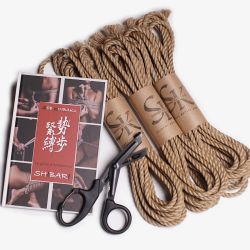
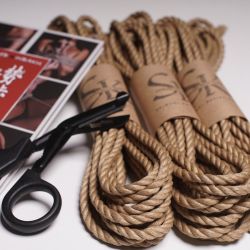
- Kit
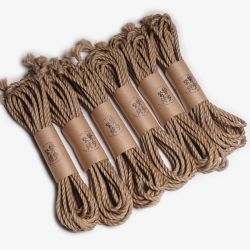
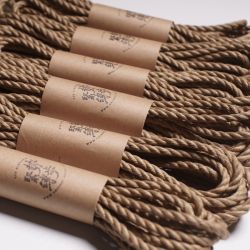
- Kit