
Rice Straw Rope and Kinbaku: The Art of Traditional Japanese Shibari
Between Tradition and Sensuality: The Rice Straw Rope in Kinbaku
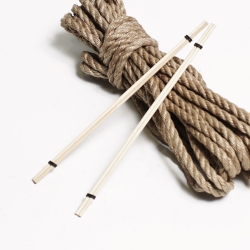
Kinbaku, literally "tight binding," is much more than an erotic practice: it is an ancestral Japanese art blending aesthetics, ritual, and controlled tension. And at the heart of this art… there is the rope. While jute is widely used today, purists and lovers of tradition are rediscovering with passion a rawer, more organic material: the rice straw rope.
?? A material rooted in the origins of Japanese rope bondage
Rice straw has long been part of rural Japan — used to craft sandals (waraji), mats (tatami), and of course, ropes. In fact, it was with this same material that early practitioners of Hojojutsu — the martial ancestor of Kinbaku — tied their captives.
Later, Itō Seiu, considered the father of modern Kinbaku, drew inspiration from these historical ropes in his erotic works, capturing the balance of cruelty and refinement in his art. Thus, the rice straw rope remains a direct link between the body, history, and material tradition.
? A sensory and symbolic experience
Using a rice straw rope in Shibari is an invitation to embrace a slower, more deliberate and conscious practice. Its texture is rougher, its vegetal scent more pronounced, its behavior less compliant than jute… yet it is precisely this rawness that makes it so symbolic and powerful.
Each knot becomes a ritual. Each friction, a dialogue between past and present, nature and skin. The rope marks, sculpts, frames — demanding absolute presence from both rigger and model.
? For whom, and why?
This rope is not for everyone. It is best suited for:
-
Traditional Kinbaku enthusiasts seeking authenticity.
-
Artists and photographers wanting a strong, visually striking texture.
-
Experienced practitioners looking for a rope that is less forgiving but deeply expressive.
It is particularly well adapted for static poses, slow suspensions, and ritualistic BDSM scenes rich in narrative and atmosphere.
? Care and precautions
Like all natural materials, rice straw rope requires attention:
-
Store it in a dry place.
-
Avoid damp conditions.
-
Check the fibers regularly for wear.
-
And above all, practice consciously and safely, as its roughness can intensify sensations.
? Conclusion: Returning to the essence of the tie
The rice straw rope is more than a tool. It is a bridge between the Japanese aesthetics of the past and the contemporary practice of Shibari. Choosing this rope means choosing slowness, texture, and depth. A return to the roots — for those who wish to bind, and be bound, differently.
Tagged in Corde
Linked products