Shopping Cart
In Stock

Shibari, often referred to as Japanese bondage, is a complex and elegant art form that transcends mere physical restraint. Deeply rooted in Japanese culture, Shibari boasts a rich and fascinating history. This article explores the cultural origins of Shibari, its evolution over time, and how it became the artistic practice known today.
The history of Shibari dates back to feudal Japan, originating from Hojojutsu, a method of restraint used by samurai. Hojojutsu involved capturing and immobilizing prisoners using ropes. These techniques were highly specific, designed to prevent captives from escaping or harming themselves. Each knot and rope placement carried particular significance, often reflecting the captive's social status or the nature of their crime.
Over time, Hojojutsu evolved from a martial technique into an erotic art form. This transformation mainly occurred during the Edo period (1603-1868), characterized by relative stability and increased interest in arts and entertainment. Rope techniques were adapted and refined for erotic pleasure and exploration. The term "Shibari," literally meaning "to tie" in Japanese, emerged during this era to describe this artistic practice.
Shibari also found its place in Kabuki, traditional Japanese theater. Scenes of capture and restraint, inspired by Hojojutsu, were incorporated into plays to enhance drama and intensity. This public exposure helped popularize Shibari as a visual and performative art.
With Japan's opening to the West at the end of the 19th century, Shibari began attracting international attention. However, its widespread global popularity only took off after World War II. Photographers and artists were drawn to its unique aesthetics and expressive potential.
In the 1950s and 1960s, Shibari became central to Kinbaku, a more specific form of erotic bondage, frequently featured in Japanese erotic photography and art. Magazines and erotic films of that period showcased Kinbaku, introducing Shibari to broader audiences.
Today, Shibari is practiced worldwide, both as performance art and intimate practice between partners. Workshops and events are common, with numerous contemporary artists exploring its aesthetic and emotional possibilities.
Modern Shibari often integrates Western influences while remaining true to its Japanese roots. Techniques have diversified and become more sophisticated, enabling practitioners to create increasingly intricate and captivating works.
Shibari is much more than a simple bondage technique; it is an art form combining tradition, aesthetics, and intimacy. Its rich history and adaptability make it uniquely fascinating. Whether pursued for erotic exploration, artistic expression, or emotional connection, Shibari continues to captivate and inspire people worldwide.
By understanding its origins and evolution, we gain deeper appreciation for this beautiful practice. Shibari stands as a tribute to Japanese culture and history, continually evolving as a dynamic and living art form.
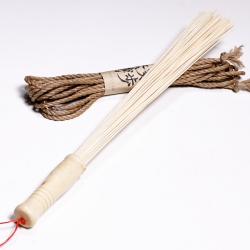
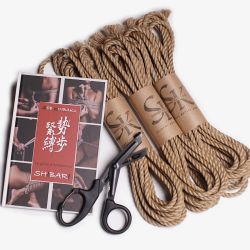
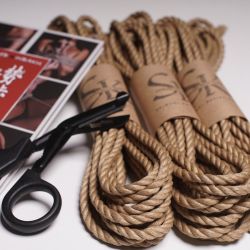
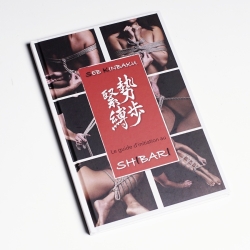

Cordes de Shibari · sélection Seb Kinbaku
Jute japonais, chanvre soyeux ou fibres alternatives : chaque corde possède un toucher, un toronnage et un comportement différents. Cette sélection privilégie la qualité, la sécurité et une prise en main cohérente, du premier nœud à la suspension.
Comprendre les différences en une minute
Une présentation courte pour repérer les différences de toucher, de souplesse et d’usage avant de choisir.
Une sélection née de la pratique
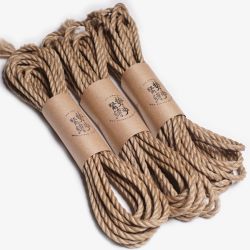
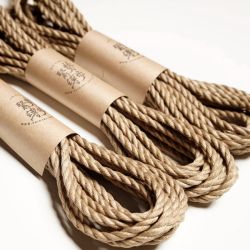
La corde SK a été créée pour Seb Kinbaku avec un artisan japonais de la région de Kyoto. Trois mois de travail, d’essais et de retours après utilisation ont été nécessaires pour obtenir une corde en longues fibres de jute, régulière et sans JBO. Son toronnage reste souple, mais il est plus serré que celui d’une Ogawa afin d’offrir davantage de stabilité et de précision.
Un jute japonais sélectionné pour sa régularité, sa prise en main et sa réponse sous tension. Le toronnage plus tenu résiste mieux aux manipulations répétées.
Voir la corde SKConnue depuis longtemps dans le Shibari international, l’Ogawa est extrêmement souple. Son traitement JBO produit une odeur qui peut déranger. Son toronnage très souple exige une manipulation précise, notamment en suspension dynamique.
Découvrir l’OgawaTrès doux sur la peau, léger en main et naturellement résistant, le chanvre soyeux dégage seulement une légère odeur végétale. Il ne demande aucun traitement et constitue un choix rassurant pour débuter.
Choisir le chanvreAu-delà des références japonaises, les fibres alternatives permettent d’explorer d’autres textures et sensations. Elles complètent la sélection sans remplacer les cordes principales utilisées pour l’apprentissage et la suspension.
Une fibre souple et légère, au toucher différent du jute traditionnel.
Une texture plus brute pour des usages au sol et des recherches sensorielles.
Une corde japonaise singulière, choisie pour sa matière et son esthétique.
La qualité SK avec une présence visuelle plus affirmée pour la scène et la photo.
Garder une corde régulière
Toutes les cordes de Shibari sont toronnées : cette construction leur apporte une excellente résistance à la traction, mais elle demande une manipulation attentive.
Besoin d’aller plus loin ? Retrouvez les guides et conseils Shibari de Seb Kinbaku.