Japanese Bondage: Understanding Shibari and Kinbaku
Japanese Bondage: Understanding Shibari and Kinbaku
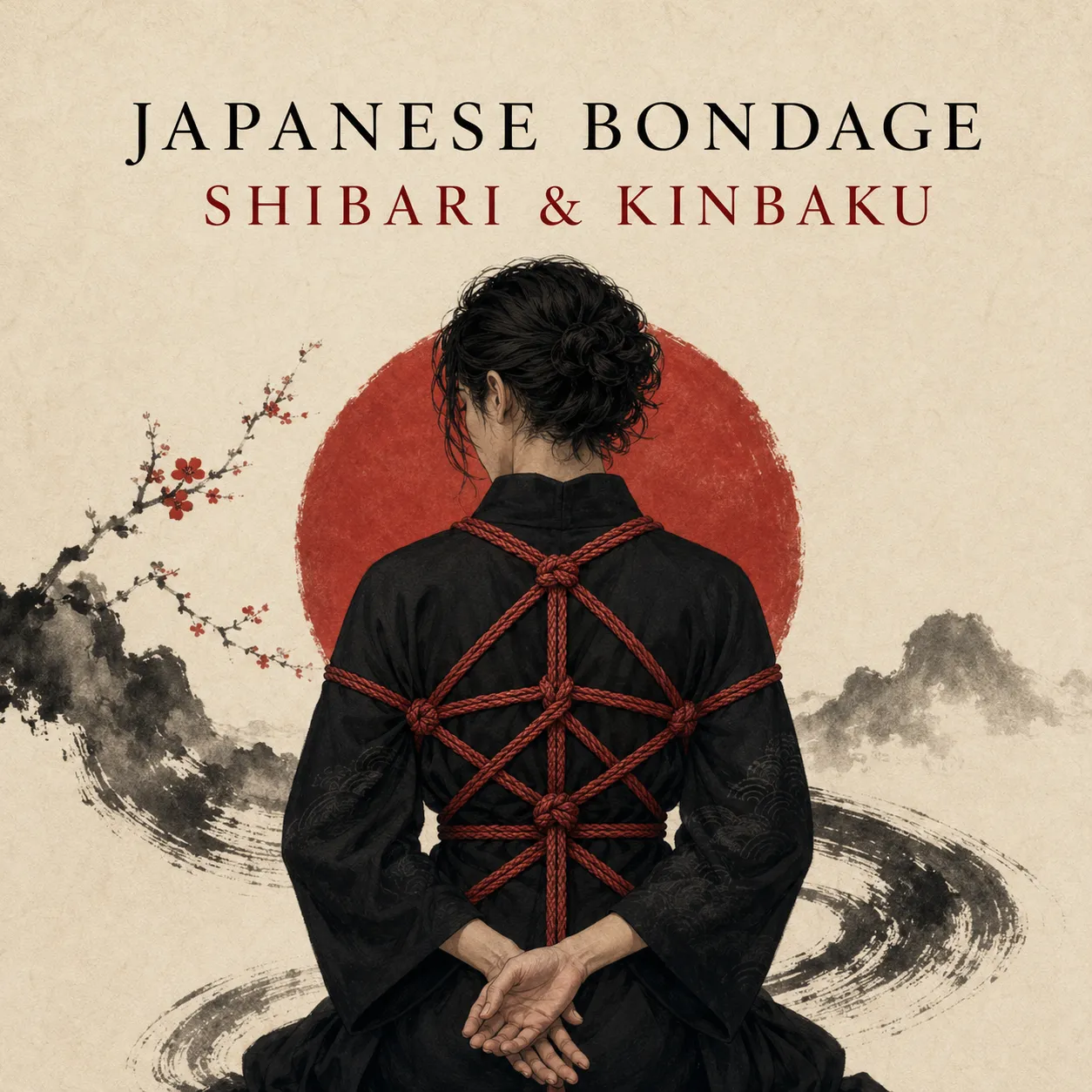
Japanese bondage, commonly known as Shibari or Kinbaku, is a form of rope bondage in which technique is only one part of the experience. Rope tension, rhythm, aesthetics, listening and the relationship between partners all play an essential role.
It is therefore not simply about restricting a body. Depending on the intention of the people involved, a session may be artistic, sensory, intimate, erotic or focused on connection. It must always be based on clear consent, continuous communication and a genuine understanding of the risks.
After more than fifteen years of practising and teaching Shibari, I believe that a session begins long before the first knot: it begins with a conversation.
What Is Japanese Bondage?
Japanese bondage is a form of rope art developed in Japan and now practised around the world. A medical paper examining injuries associated with the practice describes Shibari as the voluntary and aesthetic binding of a person with rope, with motivations that may be physical, aesthetic or psychosexual.
Rope may restrict certain movements, guide a posture, create a feeling of containment or emphasise the lines of the body. What truly separates a meaningful practice from a simple collection of knots, however, is the quality of presence between the partners.
During a session, the person tying must remain attentive to breathing, physical reactions, changes in posture and verbal feedback from the person being tied. The person in the ropes must always be able to express discomfort, communicate a limit or ask for the session to stop.
Shibari or Kinbaku: What Is the Difference?
The words Shibari and Kinbaku are often used interchangeably, although their original meanings introduce a subtle distinction.
-
Shibari comes from the Japanese verb shibaru, meaning to tie or bind. The word therefore has a broad meaning in Japanese.
-
Kinbaku conveys the idea of tight binding and can also refer to bondage in an erotic context.
In international practice, Shibari has become the best-known term for Japanese rope bondage. Some people use Kinbaku to emphasise its emotional or erotic dimension, but this distinction is not applied consistently by every Japanese artist or school. It is more accurate to regard the two terms as closely related, with nuances that depend on context, teachers and individual lineages.
The Origins of Japanese Bondage
The history of Japanese bondage is sometimes oversimplified by claiming that Shibari developed directly from Hojōjutsu, a group of historical techniques used to capture, restrain or transport prisoners.
Hojōjutsu belonged to a system of coercion and control. Contemporary Shibari, by contrast, is based on consent and cannot be confused with that historical purpose. There are technical and visual influences, but they are not enough to describe the emergence of modern Kinbaku as a simple or direct evolution.
In the early twentieth century, Japanese painter and illustrator Itō Seiu (1882–1961) played an important role in the modern representation of tied bodies. Inspired by theatre and imagery depicting punishment during the Edo period, he produced drawings, paintings and photographs that would have a lasting influence on Kinbaku aesthetics. The practice continued to develop throughout the twentieth century through photography, specialist publications, performances and transmission between artists.
Japanese bondage is therefore a living art. It retains Japanese references while continuing to evolve through different styles, cultures, bodies and contemporary sensibilities.
Is Japanese Bondage Always Sexual?
No. Shibari may have a sexual or erotic dimension, but it does not have to.
People may explore it as:
-
an artistic or photographic experience;
-
a way to explore physical sensations and letting go;
-
a moment of trust and communication within a relationship;
-
an art form based on rope and the lines of the body;
-
an intimate or erotic experience with explicit consent.
Intention should never be assumed. It must be discussed before the session. Someone may enjoy the aesthetics of rope without wanting nudity, pain or sexual contact. Another person may be looking for a more intense experience. Neither choice is more valid than the other: what matters is that the boundaries are understood and accepted by everyone involved.
Consent, Communication and Trust
In Japanese bondage, consent is not limited to obtaining a “yes” before beginning. It must be freely given, informed, specific and reversible at any time.
Before a session, discuss:
-
each person’s level of experience;
-
sensitive areas, injuries and known health conditions;
-
which actions are accepted or refused;
-
the desired level of intensity;
-
words or signals used to slow down or stop;
-
how the person will be released quickly;
-
expectations concerning nudity, photography or erotic contact.
During the session, silence or the absence of protest must never be treated as consent. Communication may be verbal, but careful observation is equally important. Unusual breathing, changes in skin colour, shaking, loss of muscle tone or a sudden difficulty responding should receive immediate attention.
Trust is not permission granted once and for all. It is built through consistency, listening and the ability to stop.
Essential Safety Principles
Japanese bondage involves real risks. Rope can compress a nerve, restrict circulation, contribute to a fall or hold the body in an unsuitable position. A 2023 clinical paper documented injuries to the radial, axillary and femoral nerves associated with full-body rope suspensions.
To begin more responsibly:
-
Learn the basic techniques on the floor first.
-
Never improvise a suspension without specific training.
-
Keep safety shears immediately accessible.
-
Never place rope around the neck or obstruct the airway.
-
Avoid vulnerable nerves and direct pressure on joints.
-
Regularly check sensation, movement and strength in the hands and feet.
-
Stop immediately if there is numbness, tingling, electrical pain, loss of strength or difficulty moving.
-
Plan how the ropes will be removed before the session begins.
-
Inspect every rope and piece of equipment before use.
-
Do not practise when alcohol, drugs or severe fatigue may affect judgement and communication.
The Merck Manual explains that prolonged pressure on a nerve can cause tingling, numbness and muscle weakness. If neurological symptoms persist after the ropes have been removed, seek prompt medical advice.
Which Rope Should You Choose for Japanese Bondage?
The choice of rope affects texture, fluidity, friction and the precision of each movement. Natural fibres such as jute and hemp are particularly common in Japanese rope bondage.
For beginners, a rope measuring 6 mm in diameter and 8 m in length is a versatile format. Three ropes are enough to practise many fundamental floor ties without buying unnecessary equipment.
Jute Rope
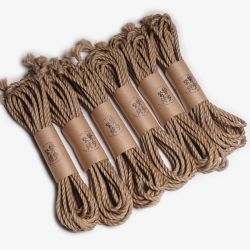
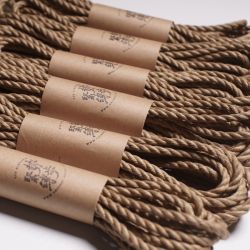
Light and responsive, jute provides fluid handling and an aesthetic closely associated with Japanese Kinbaku. The SK Japanese jute Shibari rope measures 6 mm by 8 m. It is made in Japan, prepared by hand and supplied ready to use.
Hemp Rope
Hemp generally provides a softer texture and a different feeling in the hands. It can be particularly comfortable when learning rope placement and practising on the floor.
A Beginner Shibari Kit
The SK Shibari Beginner Kit brings together three matching ropes, safety shears and an illustrated guide. It offers a simple way to avoid starting with incomplete or unsuitable equipment.
Whatever material you choose, a rope is never “safe” by itself. Good equipment must always be combined with appropriate technique, active monitoring and a suitable environment.
How Can You Learn Japanese Bondage?
Books and videos can help you understand the vocabulary, rope handling and basic principles. They cannot provide the real-time corrections of an experienced teacher, particularly when it comes to rope placement, tension management and vulnerable anatomical areas.
A sensible learning progression is to:
-
learn how to handle, inspect and store your ropes;
-
master a few simple floor ties;
-
practise consistent tension;
-
learn how to monitor nerves, movement and sensation;
-
develop clear communication before, during and after each session;
-
approach partial loading or suspension only with appropriate training.
Private Shibari classes in Paris allow complete beginners to start from the fundamentals and experienced practitioners to correct or refine their technique. Safety, consent, fluidity and connection are taught alongside the technical use of rope.
Japanese Bondage: Far More Than Rope
Discovering Japanese bondage is not simply about learning knots or reproducing a shape seen in a photograph. It means learning to observe, listen, adjust tension and respect what the body is communicating.
Shibari can be aesthetic, sensual, erotic or deeply relational. Its richness lies in this diversity. Whatever form it takes, however, the foundations remain the same: consent, communication, progressive learning and responsibility.
Rope is a tool. The value of a session comes from how that tool is used and the relationship created around it.
Frequently Asked Questions About Japanese Bondage
What Is the Difference Between Japanese Bondage and Shibari?
In common usage, Shibari refers to the Japanese form of rope bondage. “Japanese bondage” is therefore a descriptive expression, while Shibari is the term most commonly used by practitioners.
Is Shibari Only for Couples?
No. Shibari may be explored by couples, regular rope partners or within a professionally taught class. Roles, boundaries and intentions must always be clearly established.
Can You Start Japanese Bondage Alone?
You can practise rope handling on your own or work with an inanimate object. Self-tying, however, can make a quick release impossible in the event of faintness, entrapment or nerve compression. Exercises involving the body should be learned and practised in an appropriate setting.
How Many Ropes Do Beginners Need?
Three 8 m ropes are enough to learn many foundational techniques and create a range of floor ties. The consistency and quality of the equipment matter more than the quantity.
Which Rope Is Best for a Beginner?
A natural-fibre rope measuring 6 mm by 8 m is a versatile starting format. Jute is lightweight and responsive, while hemp often feels softer. The best choice depends on the intended practice, the desired level of comfort and the training received.
Can Beginners Start With Suspension?
No. Suspension places significant loads on the body, rope and anchor point. It requires specific technical and anatomical training, reliable equipment and a rapid lowering procedure.
Linked products
- Kit